

by
 Joseph Freeman
| Updated Oct 15, 2026
Joseph Freeman
| Updated Oct 15, 2026
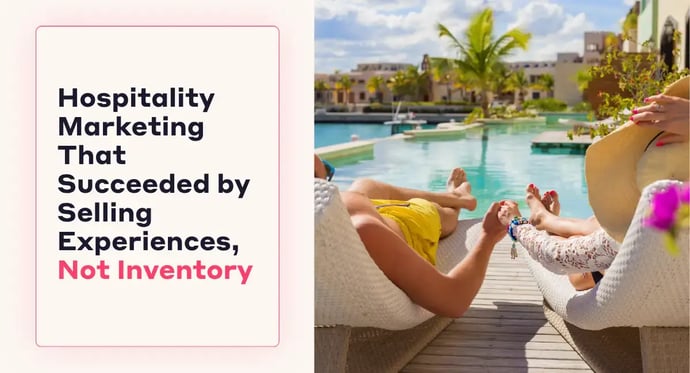
Most properties market the wrong thing. They sell rooms, tee times, and sites as inventory: a rate, a date, a booking button, priced against every competitor within driving distance. The properties that win at hospitality marketing sell something you can't shop on price, the experience a guest actually came for. The golf trip with old friends. The wedding weekend. The night out that happens to have a bed upstairs. Guests remember the experience, book it again, and bring people with them. Rooms get compared. Experiences get chosen.
This works whether you run a boutique hotel, a golf or multi-amenity resort, or a luxury RV park. Below are three properties that sell the experience rather than the room, each doing it differently, and the play you can run at your own place.
What selling an experience means
Experience-led hospitality marketing means selling the reason a guest is coming, not the unit they'll sleep in. A room is inventory: interchangeable, comparable, sorted by price on a booking site next to a dozen others. The round with friends, the anniversary weekend, the design-forward escape into the woods has no direct comparison. That's what lets you market on the feeling and the story instead of the nightly rate, and it's what makes someone choose your property on purpose.
Travelers have been moving this way for years. Consumers, especially Millennials and Gen Z, keep shifting their money toward experiences over possessions. They're buying the trip, the story, the photos they'll post, and the property is the setting. Sell the setting like a commodity and you compete on price. Sell the experience and you compete on something no OTA rate filter can rank.
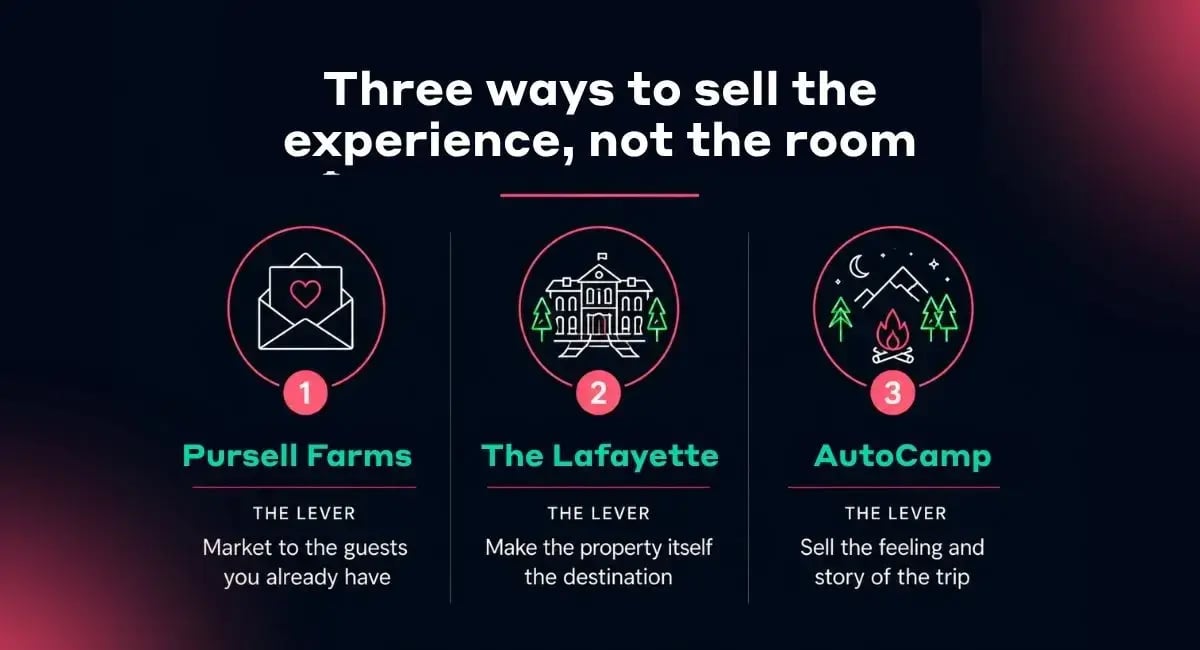
None of the examples below share a single playbook. One sells to the guests it already has, one turns the building into a destination, and one sells the feeling of the trip before you ever see a room. What they share is the decision to lead with the experience.
Three approaches to hospitality marketing that sell the experience
Pursell Farms markets to the guests it already has
Pursell Farms, a luxury golf resort in Alabama, grew by paying attention to the guests already walking the property. Instead of chasing new bookings through third parties every season, it captured the people who came for golf and weddings, then marketed to them directly around the reasons they visited.
That turned quiet months into booked ones: shoulder-season group bookings rose 138% year over year, and corporate event revenue climbed from $1M to $1.95M. The lever here is the guest relationship. Sell the retreat, the group weekend, the return trip to people who already know the place, and you stop renting demand you already earned.
The Lafayette Hotel sells the building as a destination
The Lafayette in San Diego reopened in 2024 after a $31M renovation and markets itself as an urban resort, not a place to sleep.
You book it to be part of what's happening: a 1946 pool designed by Olympic swimmer and original Tarzan Johnny Weissmuller, eight bars and restaurants, a bowling-and-billiards room, live music and supper club nights, a 24-hour diner.
Locals come for the scene, travelers book to stay inside it. When the property itself is the attraction, the room is the easy yes at the end, and the marketing sells the night, not the rate.
AutoCamp sells the feeling of the trip
AutoCamp rents Airstreams and tents near national parks, and its marketing never mentions a site number. It sells the escape: mid-century design, a full bathroom and real bed, a general store, yoga and guided hikes on the property, nature with none of the sleeping-on-the-ground part.
Calling itself "nature's boutique hotel," it packages the outdoors as a design-led experience and prices on that, not on a nightly campsite rate. For anyone running a luxury RV park, this is the clearest lesson: guests will pay for the feeling and the look of the trip, so sell that, not the pad.
Why the experience beats the room
Lead your hospitality marketing with a room and you compete on price, availability, and whoever bids highest on the booking site that day. Lead with the experience and you compete on something only your property has. The guest who books the retreat, the pool club night, or the Airstream in the woods isn't comparing you to the place down the road, because there's nothing to compare. That's how a property charges for value, earns the repeat visit, and gets talked about.
Think about what delivery apps did to restaurants. They bring in orders the kitchen wouldn't have gotten, then take a cut and keep the customer, so the diner never becomes a regular. Booking sites do the same with your rooms. Useful for getting found, expensive when they're the only way guests reach you and you never turn that first stay into a direct relationship. Selling the experience is how you earn the guest instead of renting them.
How to sell the experience at your property
Pick the reason guests come, market that, and capture the guest so the next booking comes to you. This hospitality marketing play works for any property with rooms or sites to fill. Four moves make it real.
- Package the experience, not the room. Sell the golf-and-dinner weekend, the anniversary stay, the long weekend with the fire pit and the kayak. Give guests something to picture and a reason that isn't the rate.
- Capture contact details before guests leave. A Wi-Fi sign-in that asks for a name and email, a QR code at check-in, a quick ask at the front desk. Guests trade an email for the resort password without a second thought. Collect the whole party where you can, not just the name on the reservation.
- Sort guests by why they came. Golf, weddings, corporate events, a weekend at the park. A simple CRM tagged by reason beats a spreadsheet nobody updates, and it lets you send offers people actually want.
- Market the experience back to them. A thank-you, then offers tied to why they visited: shoulder-season packages, returning-guest rates, event dates on quiet weekdays. Relevant beats frequent, and it turns a one-time guest into a direct repeat booking.
This is the mechanic behind Booking Doubler™ for resorts: capture the demand you're already earning, market the experience back to it, and convert it into direct bookings you keep. Pursell built the system to do it every month instead of hoping the off-season filled itself. The Lafayette and AutoCamp lead with the experience from the first ad. Either way, the room stops being the pitch.
Don't build your bookings on one channel
The risk in any of this is leaning on a single source of demand, whether that's booking sites, one ad platform, or word of mouth. Spread it across direct, email, paid, and referrals so one change doesn't blow a hole in your month. Start with the guests already on your property. Sell them the experience, capture them, and bring them back. The booking sites stay in the mix as a way to be found, not as the whole engine.
-1.jpg?width=1200&height=650&name=How%20to%20Increase%20Your%20Hotel%20Revenue%20from%20OTA%20Bookings%20Blog%20Images%20(3)-1.jpg)
Get the Shoulder Season Revenue Playbook
Selling the experience is easier with the plays written down. The Shoulder Season Revenue Playbook lays out how resorts and hotels fill rooms, tee sheets, and event space when business is slow: how to package the experience, capture guest details on-site, and run the campaigns that turn a quiet month into a booked one.
See what this could do for your property
On a Game Plan Call, we'll map where your bookings come from, where revenue is leaking, and what a system to sell the experience and rebook your guests would look like for your property. You walk away with a plan you can use, whether or not we work together.